

Adult Speech Pathology
What we do
Communication and swallowing can change at any stage of life, whether suddenly after a stroke or injury, gradually with a progressive condition, or as something you’ve lived with for years and want support with.
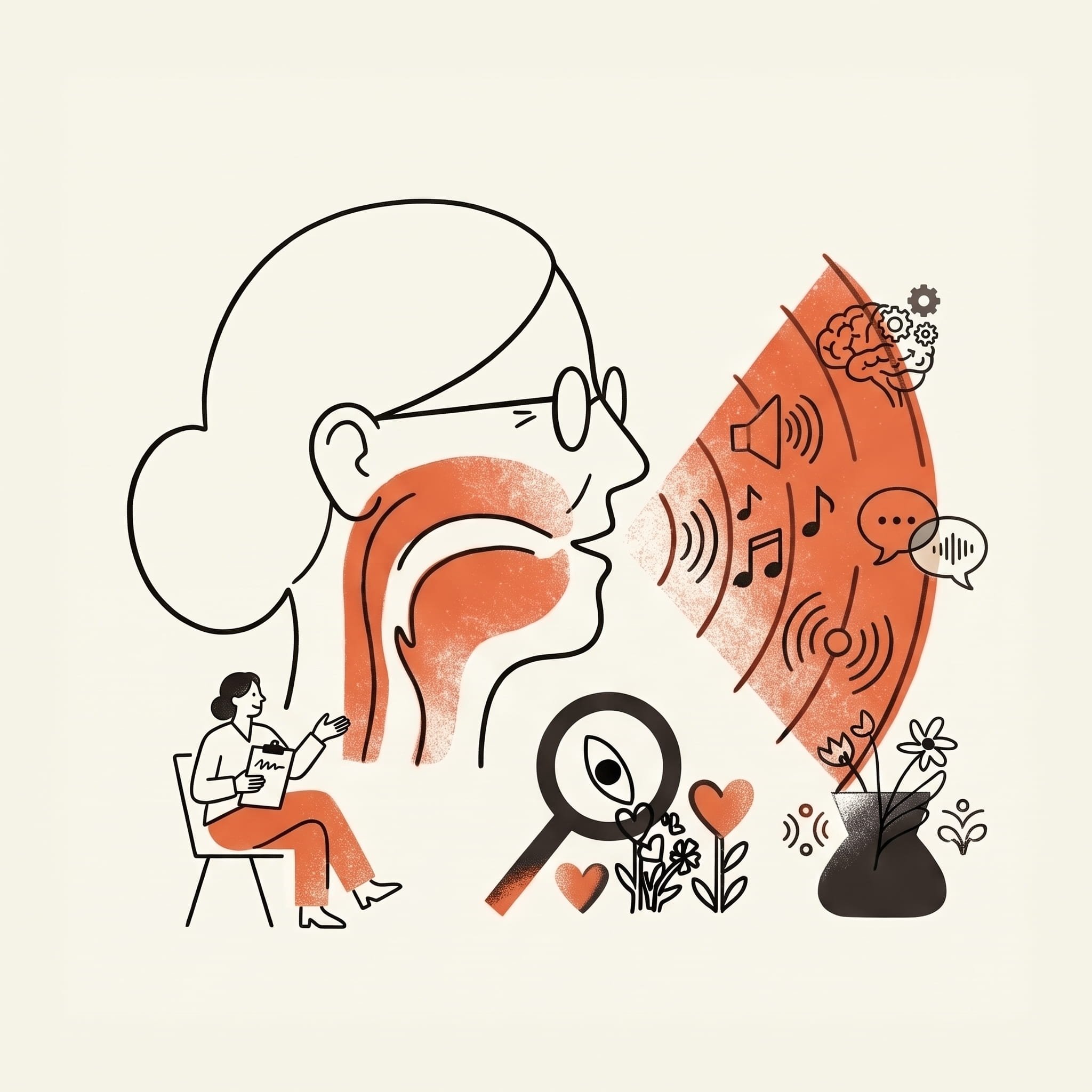
Our speech pathologists work with adults to assess and support speech, language, voice, fluency, cognitive-communication and swallowing. Therapy is built around what matters to you, whether that’s getting back to work, talking with family, eating safely, or feeling more confident in conversation.
Who we see
We work with adults who have:
Aphasia – difficulty finding words, understanding, reading or writing, often after a stroke
Dysarthria – slurred, quiet or unclear speech due to weakness or changes in muscle control
Apraxia of speech – difficulty planning and coordinating the movements for speech
Swallowing difficulties (dysphagia) – coughing or choking when eating or drinking, or food sticking
Voice difficulties – hoarseness, vocal fatigue or loss of voice, including for people who use their voice heavily at work
Stuttering – support to manage stuttering and speak with more ease
Cognitive-communication difficulties – after a brain injury, affecting attention, memory, organisation or social communication
Progressive conditions – such as Parkinson’s disease, motor neurone disease, multiple sclerosis or dementia, where we help maintain communication and swallowing for as long as possible
Disability and neurodivergence – neuroaffirming support for autistic adults, adults with ADHD, and adults with intellectual disability, cerebral palsy or acquired disability, including AAC, social communication, self-advocacy and mealtime management
Communication and swallowing support in aged care – including advice for carers and staff


How it works
We begin with an assessment to understand your strengths, difficulties and goals. From there, we put together a therapy plan that might include direct therapy, home practice, strategies for everyday situations, and training for family members or carers.
Where it helps, we can also look at communication aids and technology, and work with your GP, neurologist, rehab team or other health professionals.
Sessions are available in clinic, at home or in residential care, and by telehealth.
Funding
Adult speech pathology may be covered through:
Private health insurance (extras cover)
Medicare Chronic Disease Management plans via your GP
NDIS
Aged care funding, including Support at Home
DVA, workers’ compensation and motor accident (CTP) claims
If you’re not sure what you’re eligible for, our team can talk you through it.
Get started
You don’t need a referral to book, although a GP or specialist referral can help with some funding options. Contact our team to arrange an assessment.